AI app builders vs planning first: which gets you to a real product?
Prompt-to-app tools are fast for prototypes. Here is where they shine, where they stall, and why a plan-first workflow holds up for larger products.
 TwoSprint Team
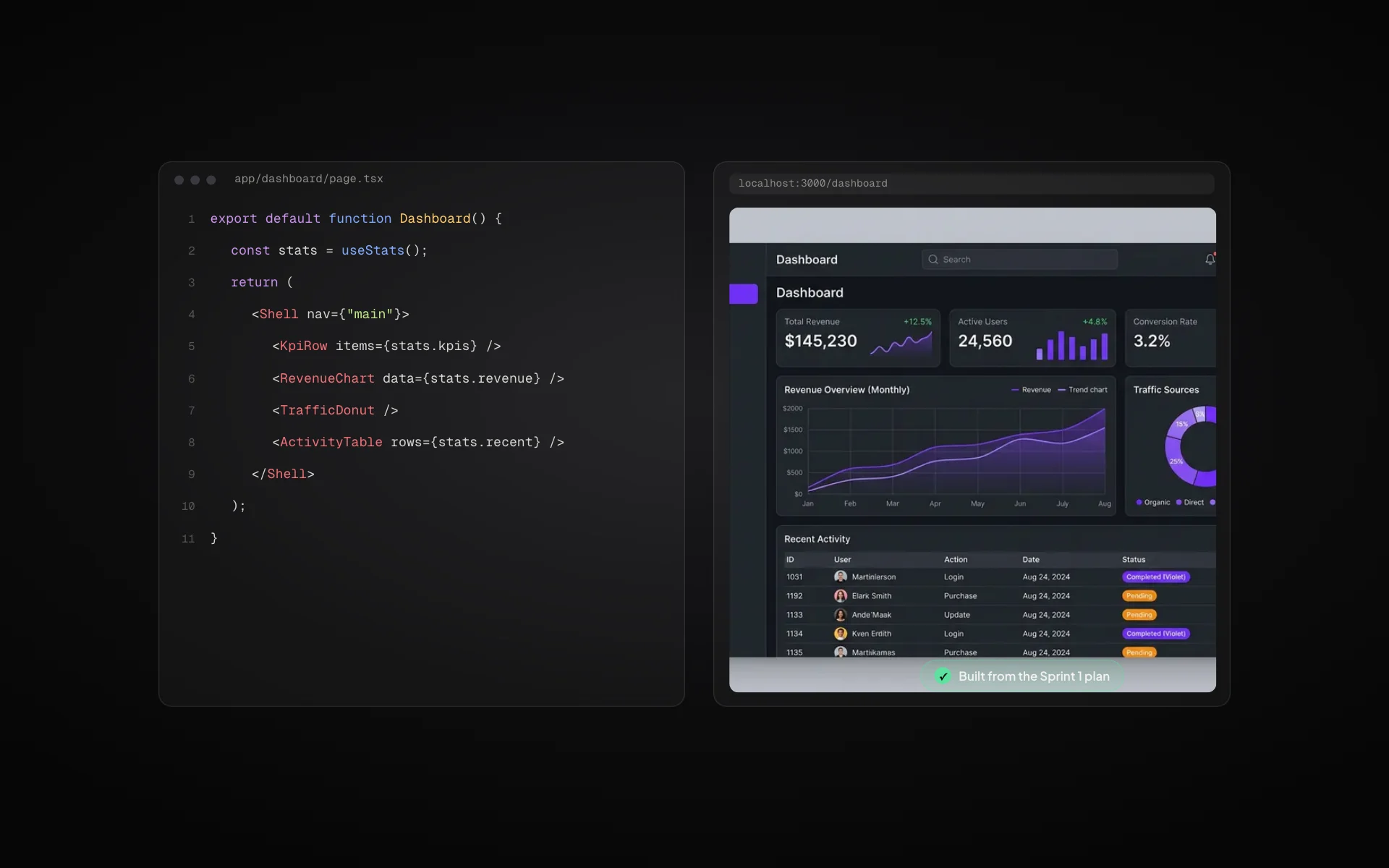
AI app builders have made it possible to go from a sentence to a working screen in minutes. That is a real breakthrough, and for many ideas it is the right starting point. But founders building larger products often hit the same wall a few weeks in. This article looks at both approaches honestly.
Where prompt-to-app builders shine
- Quick prototypes to show an idea to users or investors
- Small tools with a handful of screens and one type of user
- Testing a layout or interaction before committing to it
- Internal tools where polish matters less than speed
If your product fits these, a prompt-based builder can be the fastest path, and you should use one.
Where they stall
Problems appear as the product grows. Each prompt is a local decision: one screen, one fix. Nobody decided the overall structure, so the app becomes a pile of screens that each work but don’t fit together. Typical symptoms:
- Styling drifts screen by screen because there is no shared design system
- New features break old ones because data and flows were never mapped
- Multiple user roles and permissions get bolted on late
- You re-explain your idea in every session because the context is lost
What planning first changes
A plan-first workflow makes the big decisions once, before generating screens: who the users are, which features are core, how the journeys and flows connect, and what the design system is. The build then executes those decisions instead of guessing them. It takes a little longer at the start and much less time in the middle.
Speed at the start is easy. Speed in month three is what decides whether the product ships.
A simple way to choose
Ask two questions. Will the product have more than about twenty screens or more than one type of user? Will other people (a team, investors, an agency) need to understand how it is put together? If either answer is yes, plan first. If both are no, a prompt-based builder is probably fine.
Where TwoSprint fits
TwoSprint is built for the plan-first path. Sprint 1 turns the idea into a complete plan: market, features, journeys, flows, design system and tasks. Sprint 2 builds from that blueprint in the same workspace, so the context is never lost. It is made for real products with many pages and several user roles, not just one-page apps.
Plan, build and grow like a professional
Turn your idea into a structured product plan, build it into a working product, and grow with dedicated tools.
Start your productKeep reading
All posts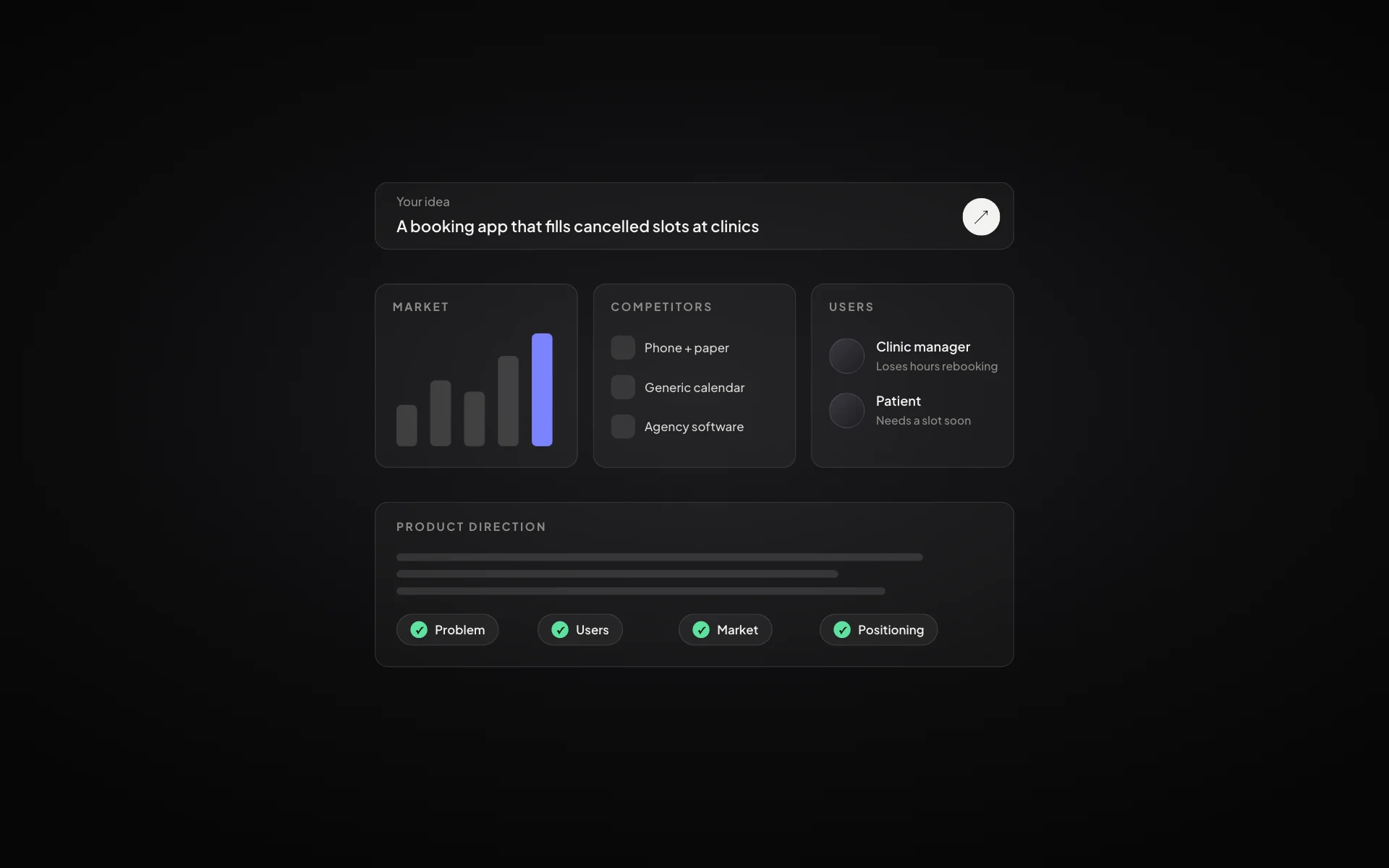
How to validate a startup idea before you build anything
Five checks that tell you whether an idea is worth building: the problem, the people, the alternatives, the willingness to pay and the first channel.
Read article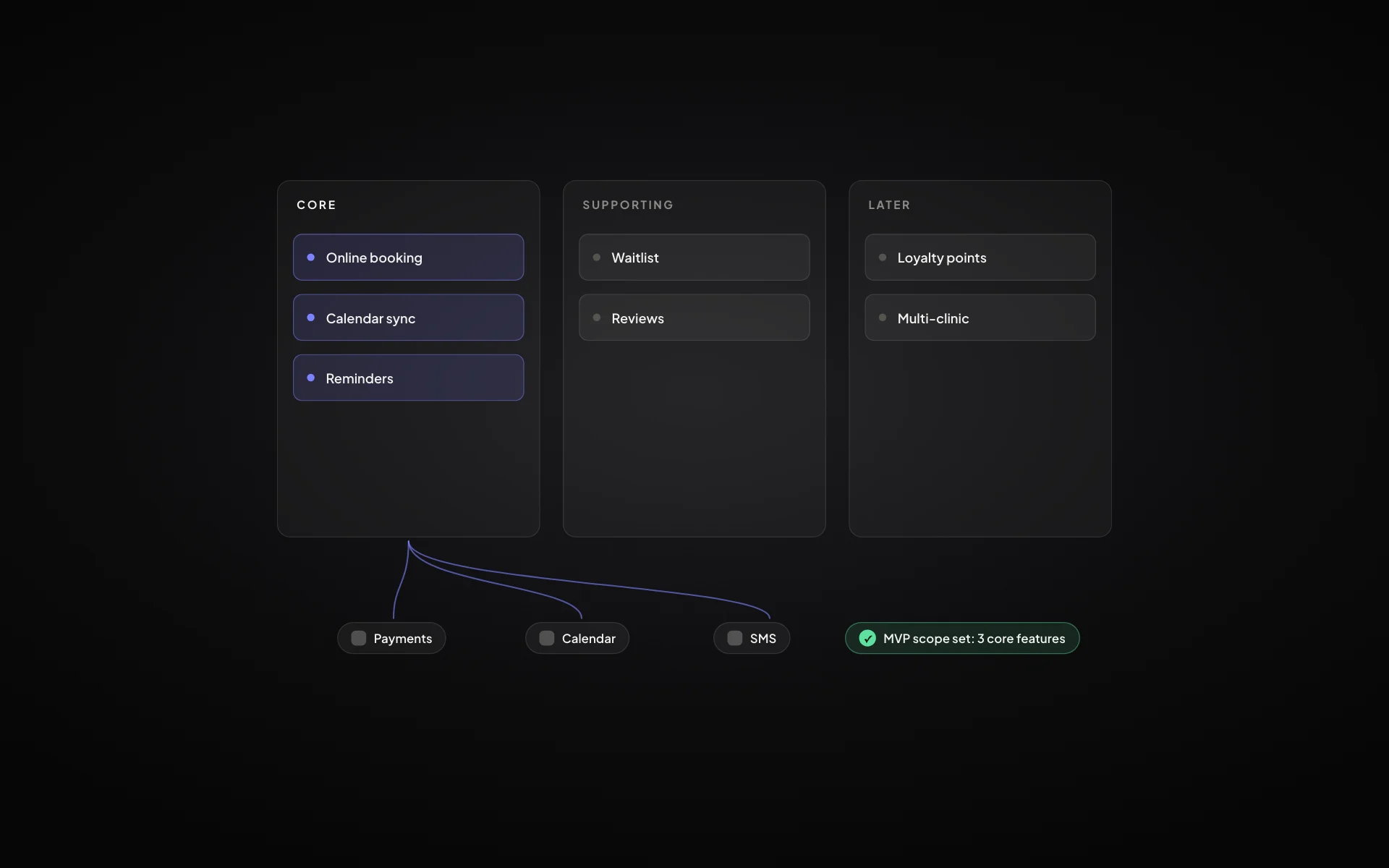
MVP scope: how to decide what goes into version one
A practical way to cut a feature list down to a minimum viable product that still solves the problem end to end.
Read article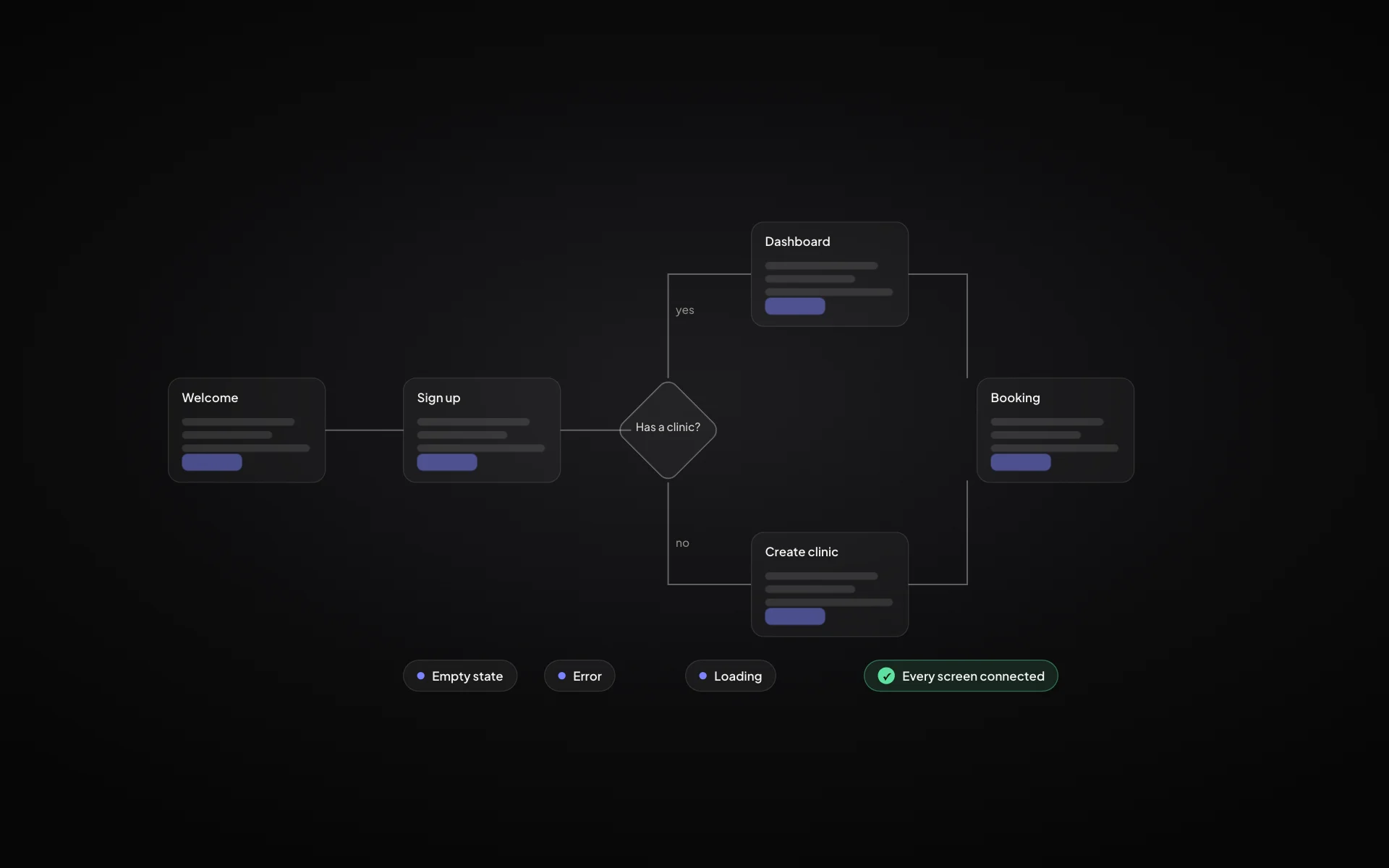
User flow vs user journey: what’s the difference and when to use each
Journeys show the whole experience over time; flows show the exact screens and decisions. Here is how they fit together in a product plan.
Read article