How to validate a startup idea before you build anything
Five checks that tell you whether an idea is worth building: the problem, the people, the alternatives, the willingness to pay and the first channel.
 TwoSprint Team
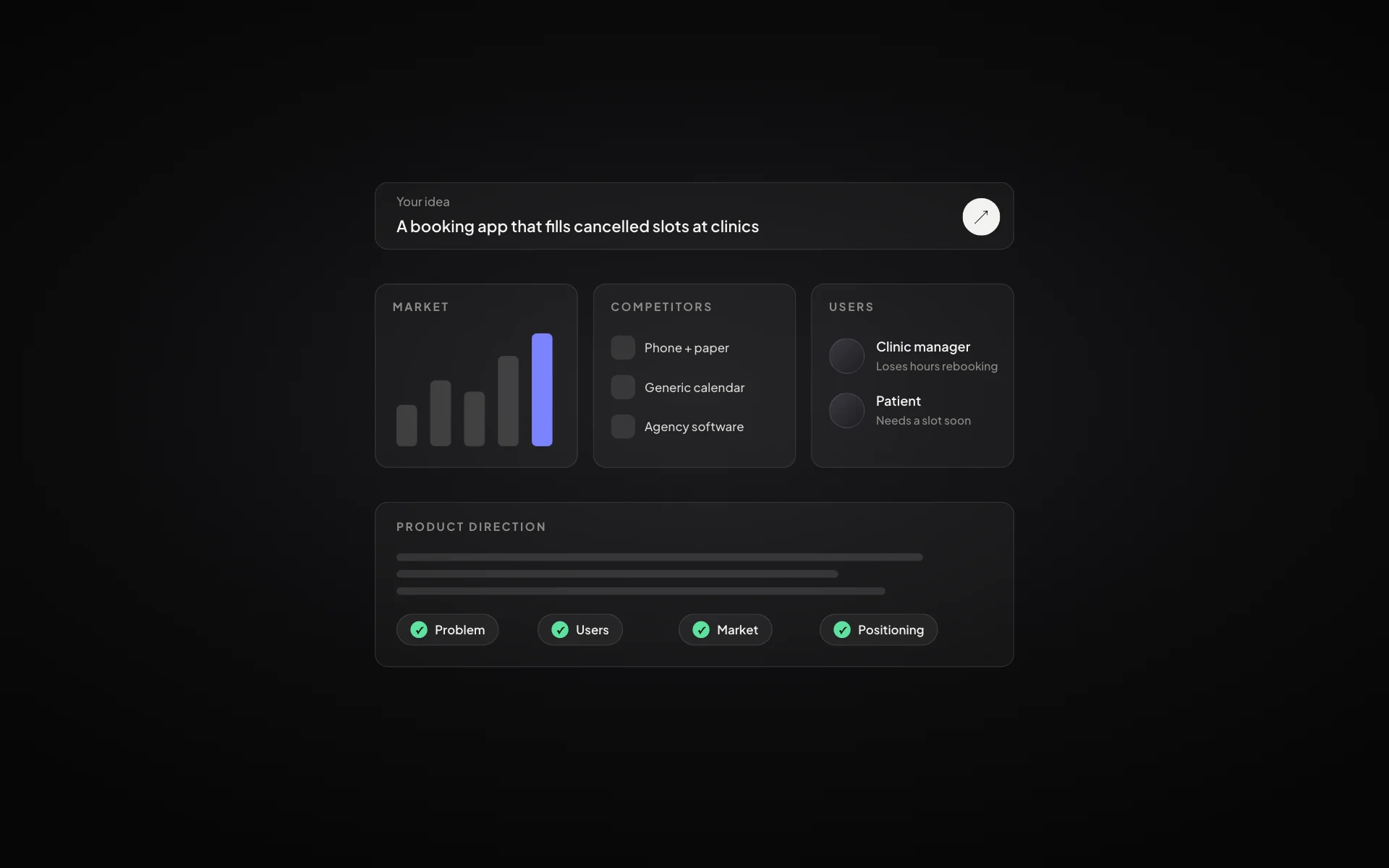
Validating a startup idea does not mean proving it will succeed. Nobody can do that. It means collecting enough evidence that the problem is real, that specific people feel it, and that they would change what they do today to get it solved. If you can show those three things, you have earned the right to build. If you can’t, building will not fix it.
Here are the five checks we run on every idea before Sprint 1 moves past the Idea Workspace. Each one takes days, not months, and each one can kill an idea cheaply, which is the point.
1. Can you describe the problem in one sentence?
Write down who has the problem, what they are trying to do, and what it costs them today. “Clinic managers lose two hours a day rebooking cancelled appointments by phone” is a problem. “A better booking app” is a solution looking for one. If your sentence names no person and no cost, keep working on it before you talk to anyone.
Read the sentence to someone who has the problem. If they finish it for you, you are close. If they look confused, the problem is in your head, not theirs.
2. Talk to ten people who have it
Customer interviews are the cheapest validation there is, and the most misused. The goal is not to pitch. It is to learn how people deal with the problem now. Ask about the last time it happened, what they did, what it cost and what they tried before. Never ask “would you use this?”; everyone says yes to be polite.
- When did this last happen to you?
- What did you do about it?
- What did that cost you in time or money?
- What have you tried to fix it?
- Who else is involved when it happens?
Ten conversations with the right people usually show a pattern. If three or more describe the same pain, with a cost attached, you have a signal worth following.
3. Map the alternatives honestly
Your real competitor is rarely another startup. It is a spreadsheet, a WhatsApp group, an intern, or doing nothing. List every way people solve the problem today, including the ugly ones, and note what each costs and where it breaks. Your product has to beat the best of these on something that matters to the user, not on something that matters to you.
4. Test willingness to pay
Interest is free; payment is evidence. Before you build, try to get a small commitment: a pre-order, a paid pilot, a deposit, or at least a calendar slot for an onboarding call. A landing page with a clear price and a “reserve your spot” button tells you more than a hundred survey answers.
The strongest validation is someone giving up money or time before the product exists.
5. Find your first channel
An idea that people want but you cannot reach is still a dead idea. Before building, find out where your first hundred users spend their attention: a community, a newsletter, a marketplace, a type of creator. If you can reach them for a reasonable cost, you have a starting channel. If every route is expensive or closed, solve that first.
Turn the evidence into a plan
Validation gives you raw material: the problem sentence, the users, the alternatives and the first channel. The next step is turning that into decisions about what to build. That is what the Idea Workspace in TwoSprint is for: it researches the market and competitors, sharpens who the product is for, and carries those decisions straight into the feature set and journeys.
Plan, build and grow like a professional
Turn your idea into a structured product plan, build it into a working product, and grow with dedicated tools.
Start your productKeep reading
All posts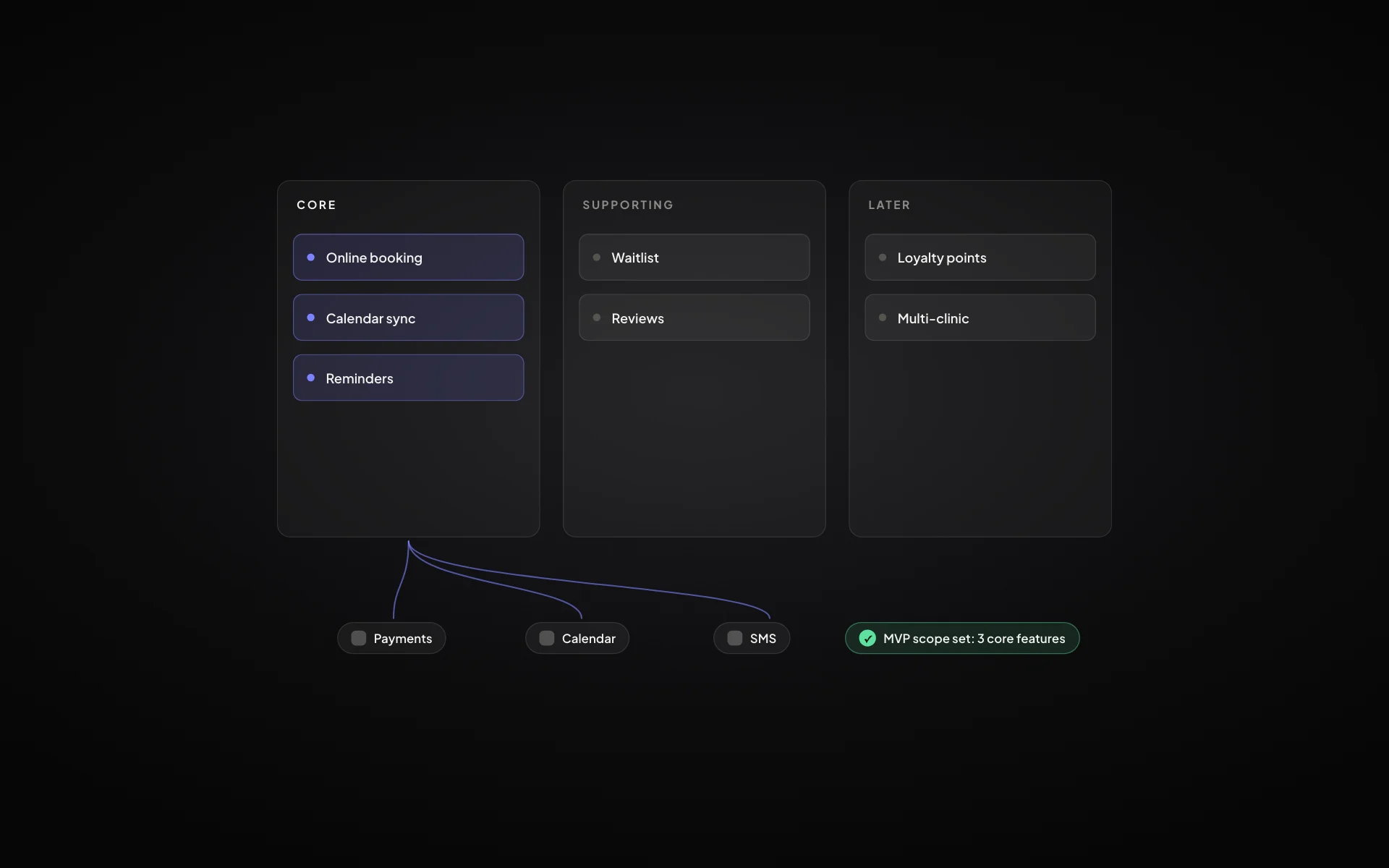
MVP scope: how to decide what goes into version one
A practical way to cut a feature list down to a minimum viable product that still solves the problem end to end.
Read article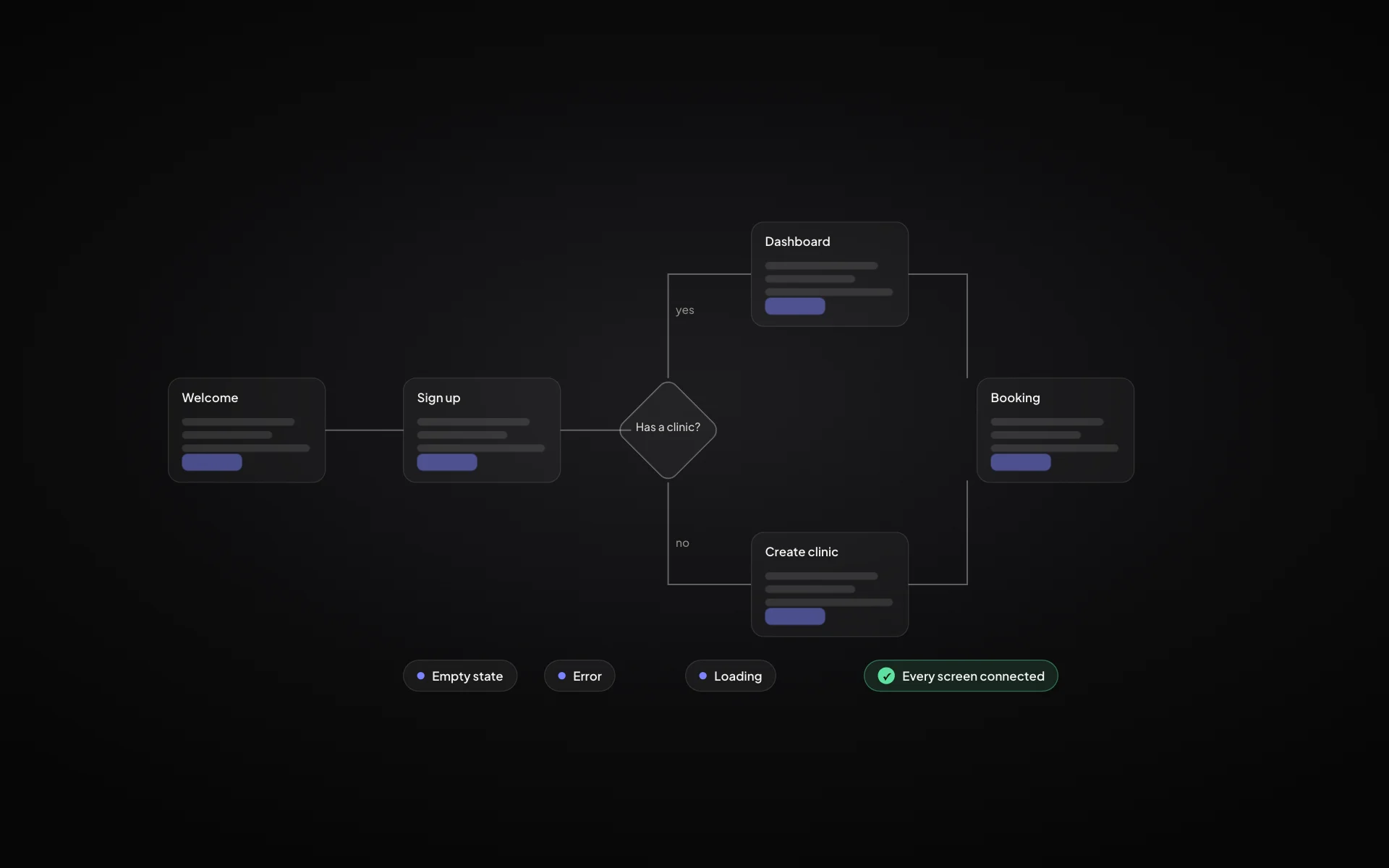
User flow vs user journey: what’s the difference and when to use each
Journeys show the whole experience over time; flows show the exact screens and decisions. Here is how they fit together in a product plan.
Read article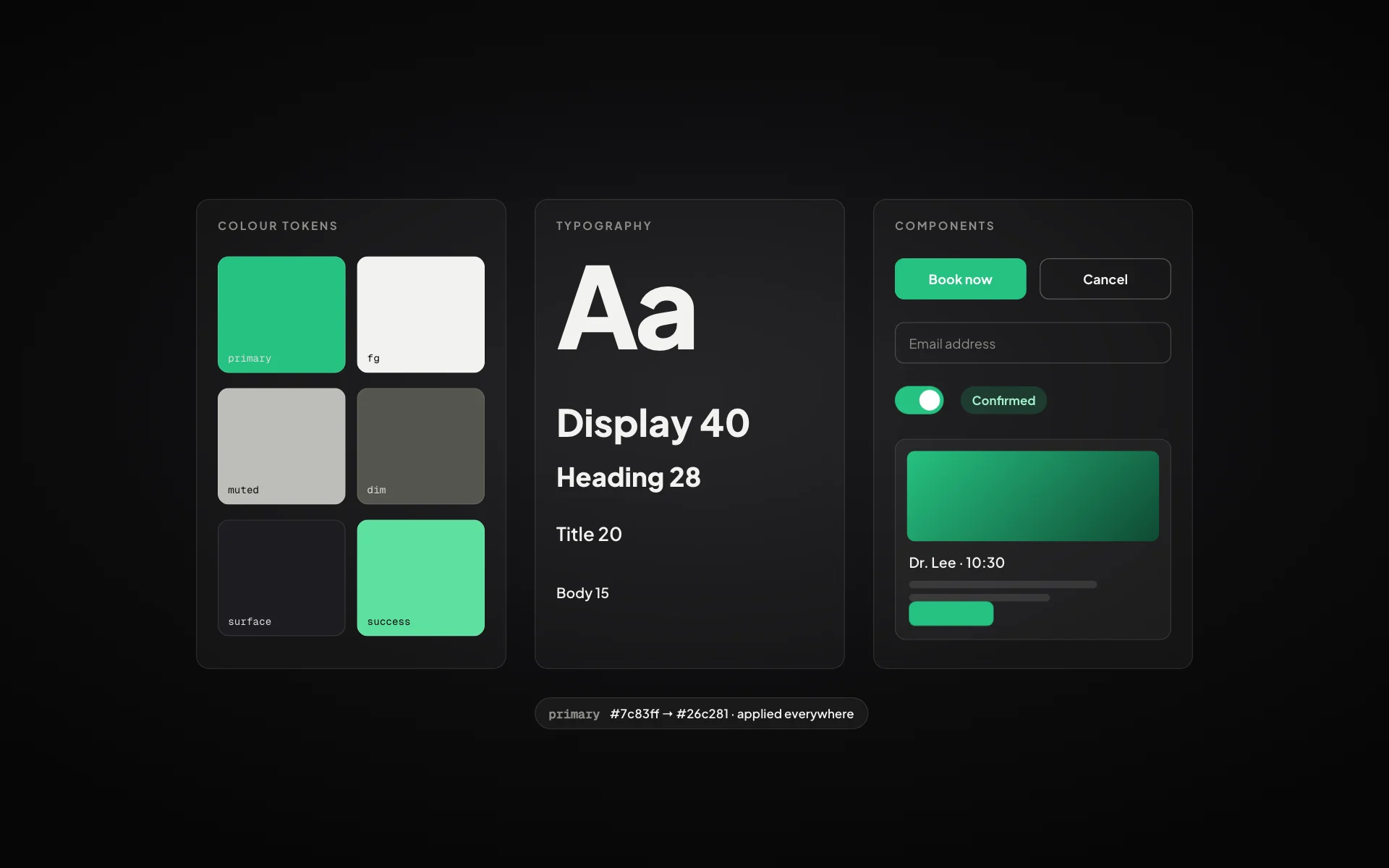
Design systems for startups: a practical guide for small teams
You don’t need a design team to have a design system. Colours, type, spacing and a handful of components are enough to look professional from day one.
Read article