Map user journeys before you write a line of code
How mapping discovery, activation and retention early saves weeks of rework later.
 TwoSprint Team
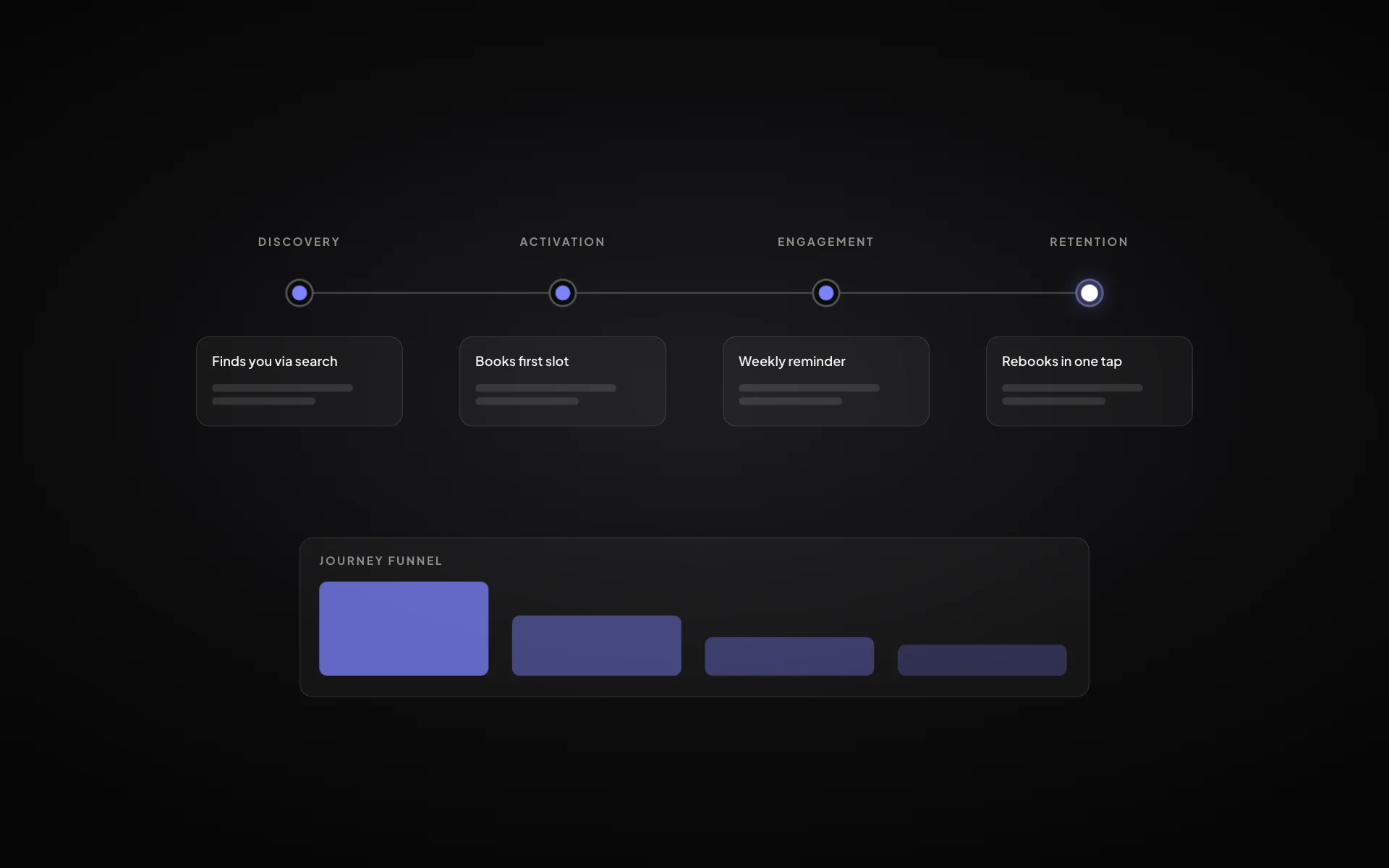
Teams usually design screens first and journeys later, if at all. It feels faster, but it means the most important question, how does a real person get value from this, gets answered by accident.
Four stages worth mapping
- Discovery: how people first hear about the product and what they expect
- Activation: the shortest path to the first real result
- Engagement: what brings people back during the first weeks
- Retention: why they are still here after three months
For each stage, write down what the user is trying to do, which screens they touch, and where they might drop off. You will find missing screens, unnecessary steps and features nobody would ever reach.
Journeys make design decisions easier
Once the journeys exist, screen design stops being a matter of taste. Every screen has a job inside a journey, and you can judge it by whether it does that job.
A screen without a journey is a guess. A journey without screens is a plan you can build.
In TwoSprint, journeys are mapped in Sprint 1 and feed directly into the flow builder, so every screen you design already knows where it sits.
Plan, build and grow like a professional
Turn your idea into a structured product plan, build it into a working product, and grow with dedicated tools.
Start your productKeep reading
All posts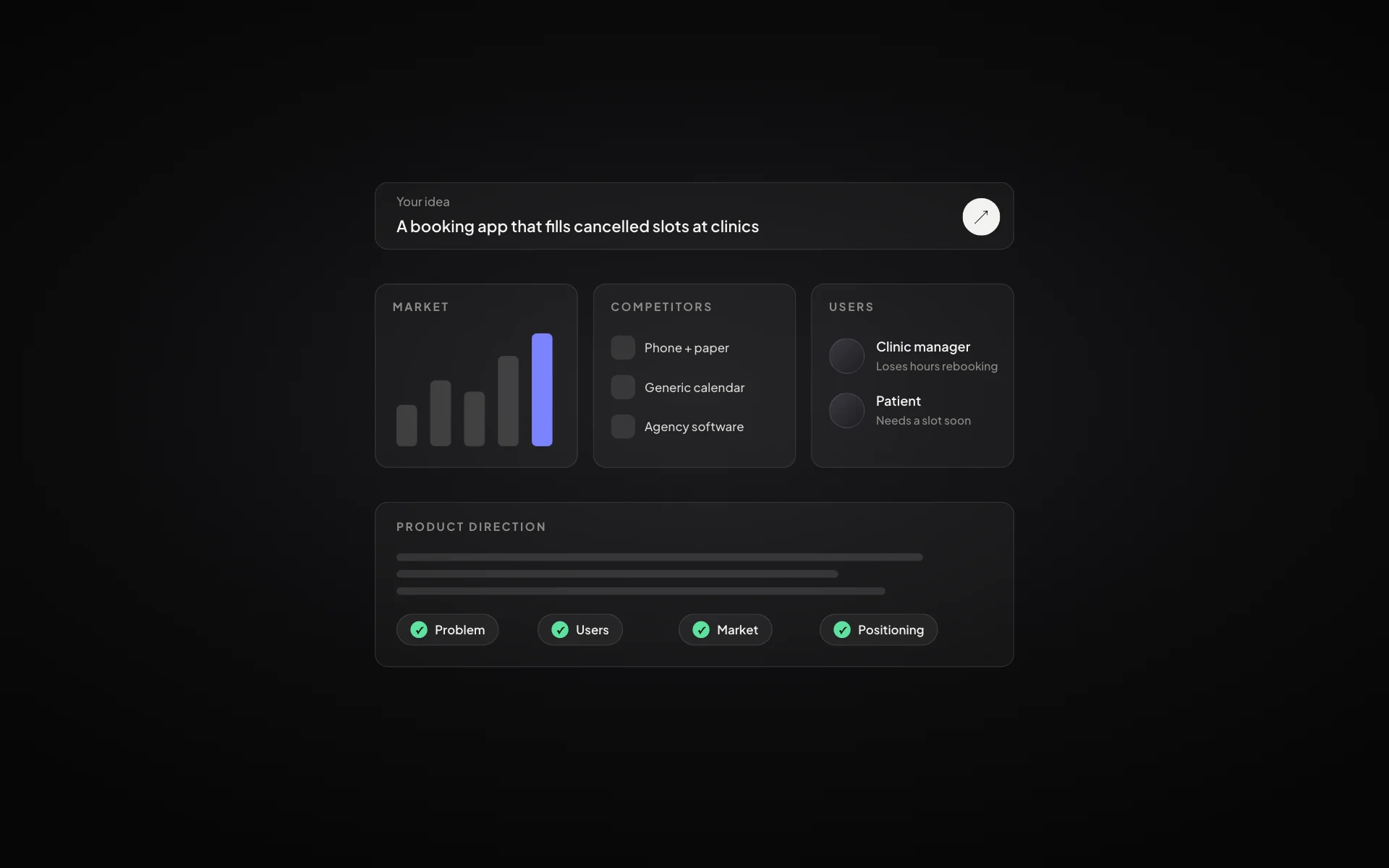
How to validate a startup idea before you build anything
Five checks that tell you whether an idea is worth building: the problem, the people, the alternatives, the willingness to pay and the first channel.
Read article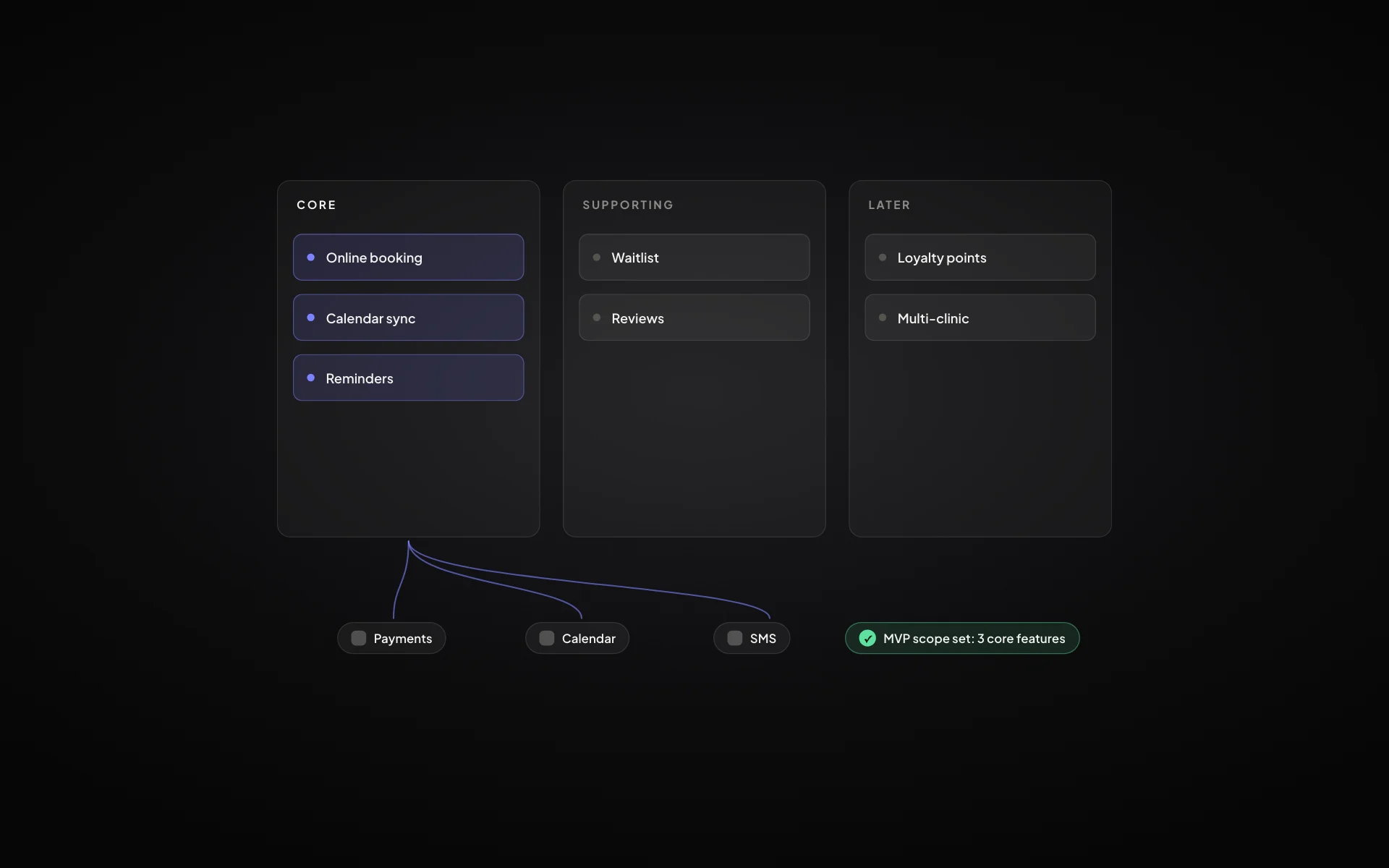
MVP scope: how to decide what goes into version one
A practical way to cut a feature list down to a minimum viable product that still solves the problem end to end.
Read article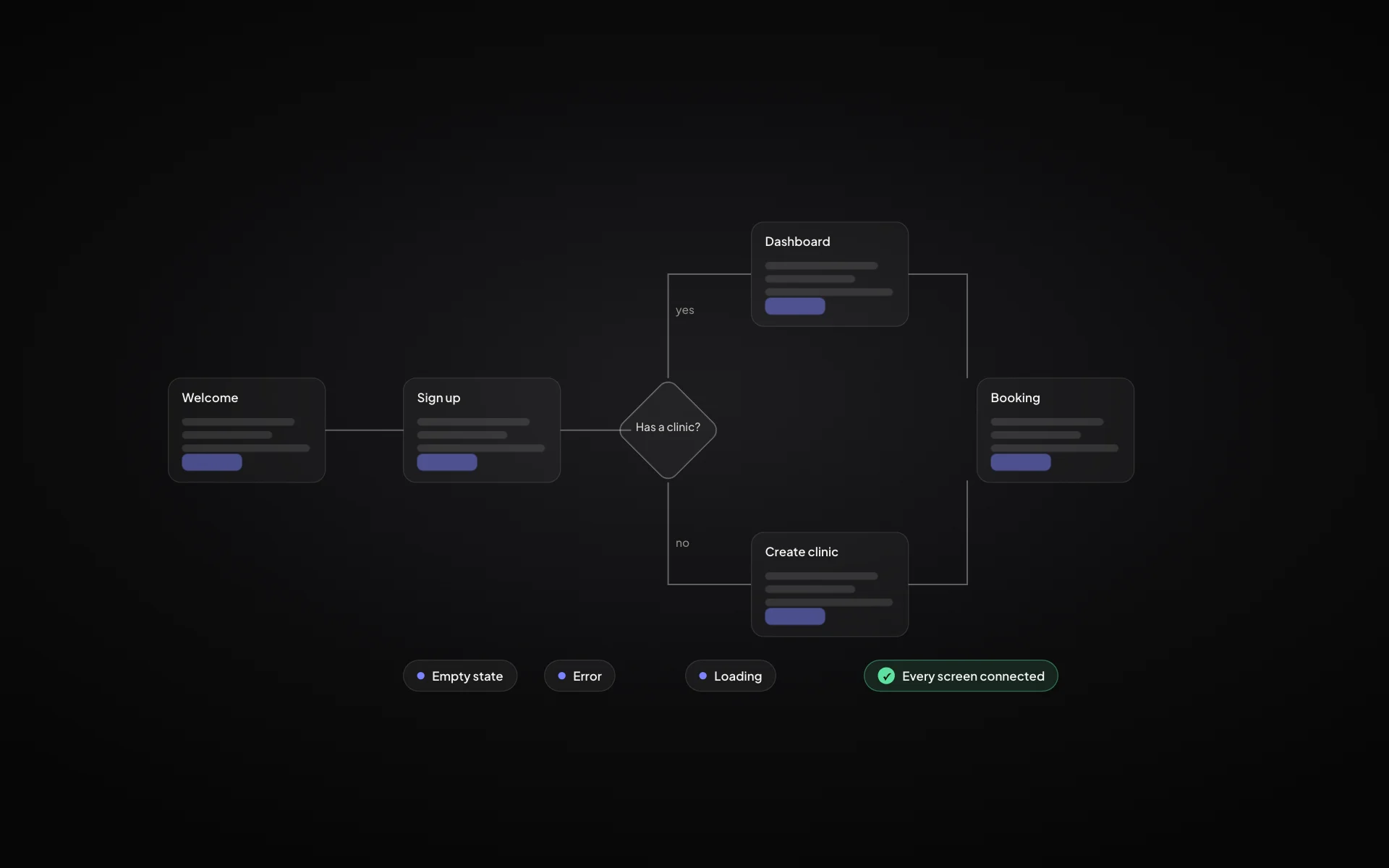
User flow vs user journey: what’s the difference and when to use each
Journeys show the whole experience over time; flows show the exact screens and decisions. Here is how they fit together in a product plan.
Read article